
Insights & Research
Exploring emerging concepts, biological interfaces and interdisciplinary approaches in modern medicine.
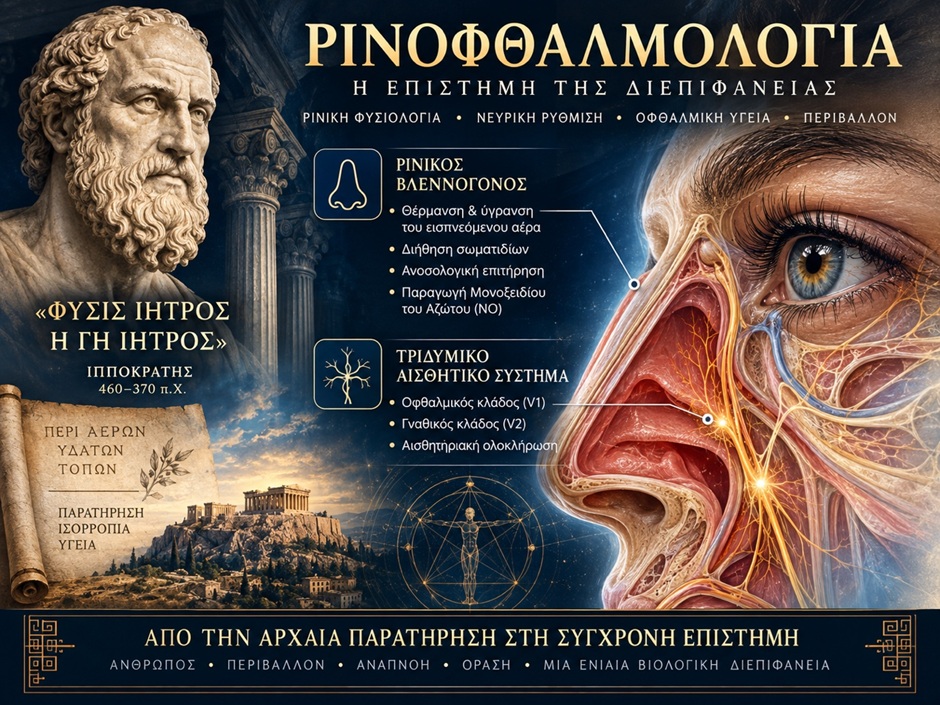
Rhinophthalmology
Abstract ABSTRACT Background The nasal and ocular systems are anatomically distinct regions, but they do not function as completely isolated biological systems. The nasolacrimal system , trigeminal sensory pathways, autonomic neural regulation, lacrimal secretion, the eyelids, tear film, and ocular surface participate in already documented anatomical and physiological relationships [1–15]. The Lacrimal Functional Unit (LFU) […]
Read ArticleLatest Research & Insights
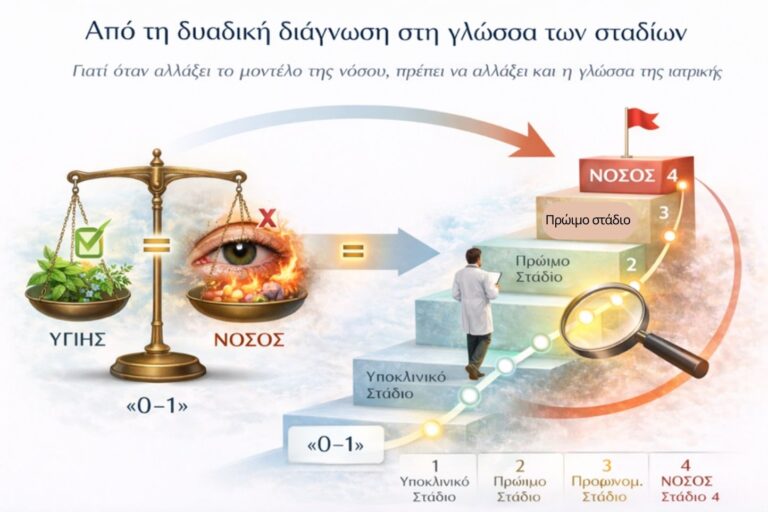
From Isolated Ophthalmic Entities to the Pathological Spectrum
EXECUTIVE SUMMARY Classical Ophthalmology relies on binary diagnostic models that inadequately describe the temporal and functional evolution of disease. Many ocular “conditions” represent stages within a continuous pathological spectrum (continuum), not independent entities. Blepharitis, MGD, dry eye disease, and chalazion are different expressions along the same pathological trajectory. Disease does not “reside” solely within the […]
Read Article
Defining the Eye–Skin Axis as an Emerging Interdisciplinary Field
A White Paper by the World Organization of Dermophthalmology (WOD)Conceived in Greece — Applied Worldwide Executive Summary Modern medicine has achieved remarkable advances through specialization. However, this necessary fragmentation has also created clinically relevant gaps—areas of the human body that do not fully belong to a single discipline and therefore remain insufficiently addressed. One such […]
Read Article
Ophthalmoderma – The New Target Organ in Dermophthalmology
Position Paper of the World Organization of Dermophthalmology (WOD) Abstract Classical Anatomy and Physiology have traditionally treated organs as separate structures with clear boundaries: eye, skin, hair, mucosa.The zones where these systems meet – the interfaces – were viewed merely as “transitional areas” between organs, not as autonomous biological systems.Dermophthalmology introduces the concept of Ophthalmoderma as a […]
Read ArticleBiological Interface Principle
A proposed framework for understanding biological interfaces as dynamic functional units involved in homeostasis, adaptation, dysregulation and disease.