
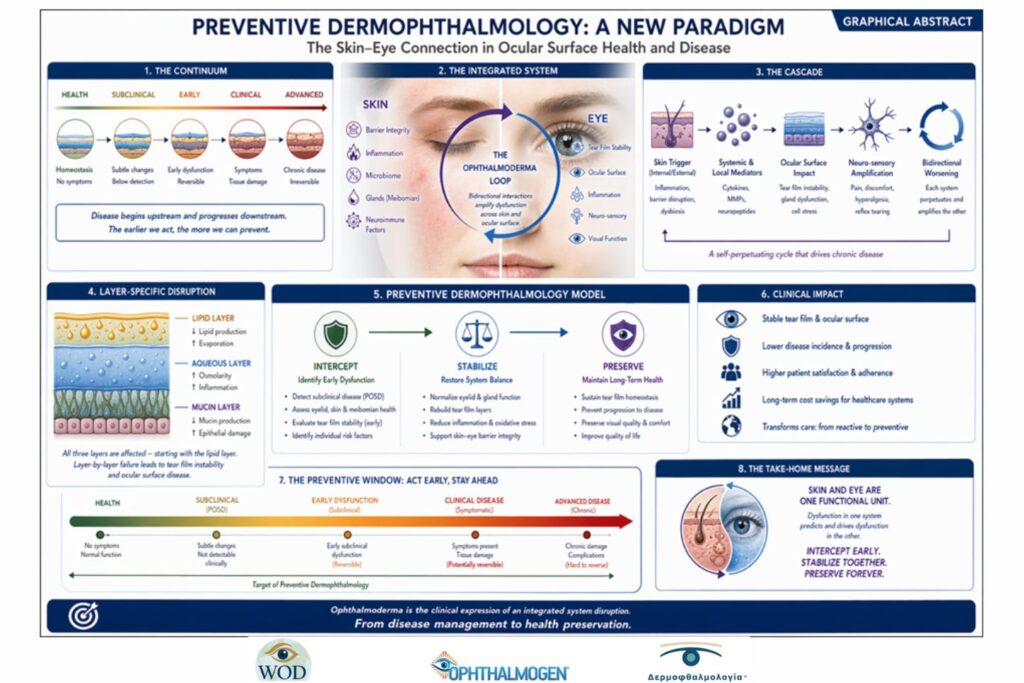
A Dermophthalmology Framework Linking Skin Barrier Dysfunction to Ocular Surface Instability
John Tsakalos¹, on behalf of the World Organization of Dermophthalmology (WOD) initiative and scientific working group
¹ Breath Purity, Dermophthalmology Research Initiative, Athens, Greece.
Abstract
Ocular surface disease (OSD) is traditionally defined and managed as a clinically manifest condition characterized by tear film instability, inflammation, and visual disturbance. However, current frameworks largely overlook the early functional phase during which disease processes are already active but not yet clinically detectable.
This work introduces the concept of Pre-Ocular Surface Disease Stage (POSD), a subclinical phase defined by tear film instability, eyelid barrier dysfunction, and early meibomian gland impairment in the absence of overt clinical signs. Within the emerging field of Dermophthalmology, ocular surface function is redefined as the output of an integrated biological system involving the eyelid skin, meibomian glands, tear film, and ocular surface—collectively conceptualized as the Eye-Skin Axis and regulated by the Ophthalmodermal Barrier.
Disruption of the eyelid skin barrier—through inflammatory, microbial, or environmental factors—initiates a cascade of dysfunction affecting lipid secretion, tear film stability, and optical surface integrity. This results in dynamic visual instability, often presenting as fluctuating vision, reduced contrast sensitivity, and visual fatigue, which are frequently misinterpreted as refractive error or non-specific eye strain.
The proposed POSD Framework Model™ describes a continuous progression from subclinical dysfunction to clinically manifest disease, including blepharitis, meibomian gland dysfunction (MGD), dry eye disease, and ocular surface disease (OSD). The model highlights the eyelids as a primary upstream driver of ocular surface instability and identifies a critical clinical gap in early detection and management.
These findings support a paradigm shift from reactive, symptom-based treatment toward preventive, system-level intervention, emphasizing eyelid health, barrier restoration, and tear film stabilization.
The disease begins before it is diagnosed.
Executive Summary
A Preventive Dermophthalmology Perspective
Overview
Ocular surface disease is commonly diagnosed only after clinical signs and persistent symptoms appear. However, growing evidence suggests that dysfunction begins much earlier, at a subclinical stage not captured by current diagnostic frameworks.