
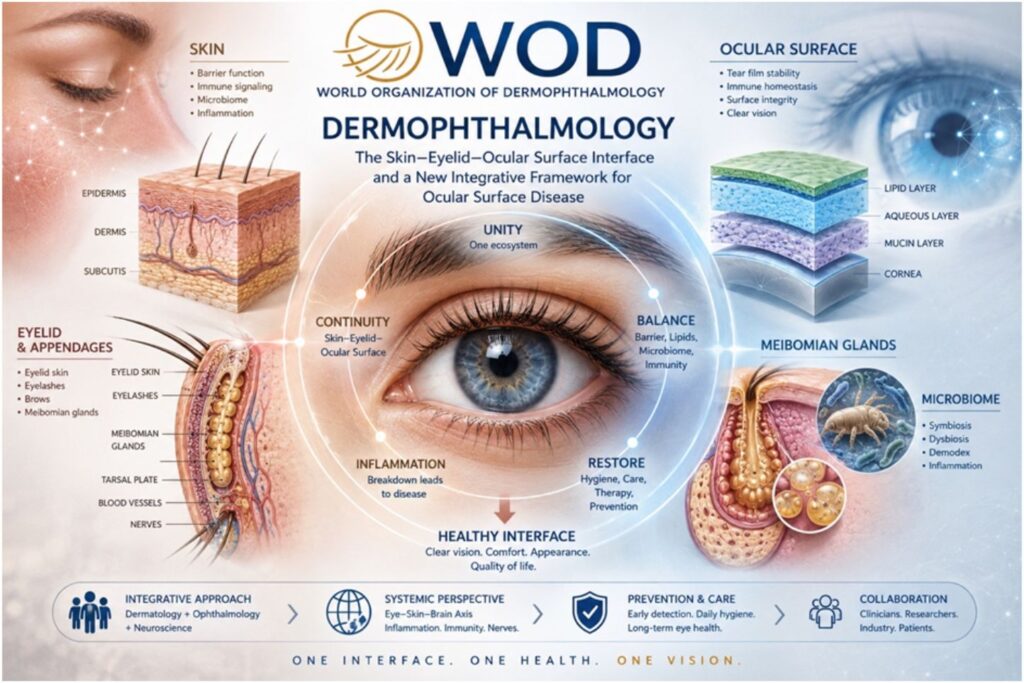
Dermophthalmology (Dermophthalmology) is an emerging interdisciplinary field of medicine that examines the functional relationship between the facial skin, eyelids, eyelashes, meibomian glands, tear film and the ocular surface.
This field is based on the observation that many ocular surface diseases, such as dry eye, blepharitis, and meibomian gland dysfunction, are not isolated ocular disorders, but are often closely associated with inflammatory or microbial processes affecting the facial skin and eyelids.
The anatomical and functional continuity between facial skin, eyelids, and ocular surface suggests the existence of a single biological system. In this context, the concept of the Facial Skin–Eyelid–Ocular Surface Continuum is proposed, which describes the dynamic interaction of these structures in health and disease.
A central element of this system is the Ophthalmodermal Barrier, a functional unit that includes the eyelid skin, the eyelid margin, the meibomian glands and the lipid layer of the tear film. Disruption of this barrier can lead to tear film instability and ocular surface inflammatory processes.
This paper also introduces the concept of the Ophthalmodermal Inflammatory Spectrum, according to which many dermatological and ophthalmological diseases are different manifestations of a common inflammatory continuum. Dermatological diseases such as rosacea, seborrheic dermatitis and atopic dermatitis can affect the eyelid microenvironment, leading to eyelid margin inflammation, meibomian gland dysfunction and ultimately ocular surface disorders.
Particular importance is given to the recognition of early subclinical stages of inflammation, which precede the onset of the disease. In this context, the Pre-Disease Model is proposed, which includes the stages of Pre-Blepharitis, Pre-Dry Eye and Pre-Chalazion. These stages may manifest with symptoms such as irritation, dryness or discomfort in the eyes, before obvious clinical findings appear.
At the same time, the present work introduces a systemic approach through the Eye–Skin–Brain Axis, which suggests that ocular surface symptoms may arise from the interaction between dermatological inflammation, tear film instability and neurosensory mechanisms that regulate the perception of symptoms.
Recognizing these interactions has important clinical implications. Dermo-Ophthalmology suggests a more integrated approach to the evaluation and management of patients with ocular surface symptoms, encouraging collaboration between ophthalmologists and dermatologists.
Finally, the proposed framework supports the development of a preventive approach to ophthalmology (Preventive Ophthalmology), where early recognition of eyelid inflammation, maintenance of microbiome balance, and daily eyelid hygiene can contribute to maintaining tear film stability and reducing the occurrence of ocular surface diseases.